
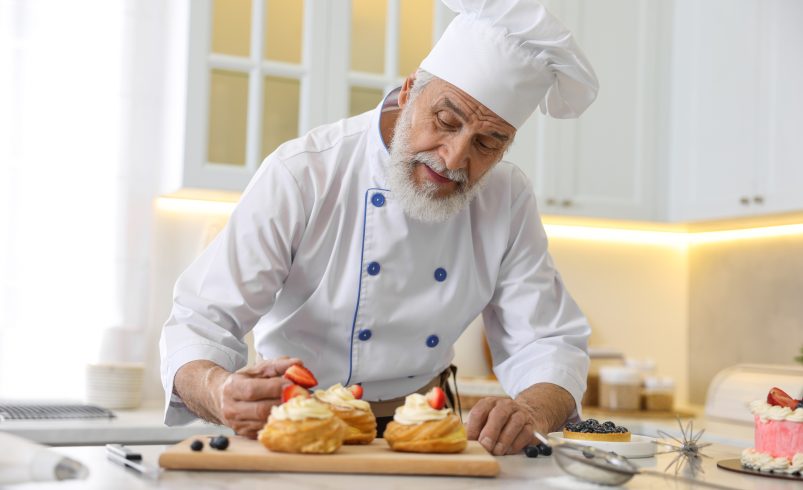

The world of Halal pastry and desserts is a delicate balance of art, science, and unwavering integrity. It’s where the chemistry of sugar, fat, and flour meets the meticulous scrutiny of ingredient sourcing. A Halal pastry chef isn’t just creating something sweet; they are engineering joy within a framework of faith and trust.
Whether you’re opening a French-inspired pâtisserie, a traditional mithai shop, a modern dessert bar, or adding a bakery section to your restaurant, hiring the right chef is critical. Here’s your detailed guide to finding the talent that can deliver exquisite, compliant, and unforgettable desserts.
The Unique Challenge of Halal Pastry Arts
In savory kitchens, the Halal focus is primarily on meat. In the pastry kitchen, the challenges are more hidden and pervasive. A master Halal pastry chef navigates a minefield of non-compliant ingredients with the precision of a food scientist.
They must be experts in identifying and substituting:
- Alcohol: Extracts (vanilla, rum), flavorings, and spirits used for deglazing or in sauces.
- Gelatin: Sourced from pork or non-Halal beef, found in marshmallows, gummies, mousses, and glazes.
- Enzymes & Emulsifiers: In chocolates, cheeses (mascarpone, cream cheese), margarines, and lecithin.
- Vanilla & Colors: Certain vanilla extracts and food colorings can be processed with alcohol.
- Cross-Contamination: In shared facilities processing items with non-Halal ingredients like lard-based pastries.
A great candidate doesn’t just avoid these; they innovate around them without compromising texture, flavor, or presentation.
Step 1: Define Your Dessert Doctrine
“Halal desserts” is a vast category. Your specific vision will attract the right specialist.
- Clarify Your Concept:
- Fine-Dining / French Pâtisserie: Plated desserts, entremets, macarons, pâte à choux. Requires precision, modern technique, and artistic plating.
- Traditional South Asian / Middle Eastern: Mithai (burfi, laddu, jalebi), baklava, kunafa, ma’amoul. Demands knowledge of syrup temperatures, nut pastes, and filo/kataifi dough.
- Artisan Bakery: Viennoiserie (croissants, brioche), breads, cookies, cakes. Expertise in laminated dough and natural fermentation is key.
- Commercial Production / High-Volume: Supply for cafes, supermarkets, or events. Focus on consistency, shelf-life, and scalable recipes.
- Craft a Precise Job Description:
- Title with Intent: “Halal Pastry Chef de Partie – Plated Desserts,” “Head Baker – Artisan Viennoiserie (Halal),” “Mithai Specialist & Confectioner.”
- Required Technical Skills: Be explicit. “Must demonstrate proficiency in: tempering chocolate without alcohol-based flavors, creating stable mousses with Halal gelatin alternatives (agar, pectin), and laminating dough with Halal-certified butters.”
- Ingredient Literacy: State it clearly: “Must have proven experience in sourcing and verifying Halal-compliant ingredients including extracts, gelatin substitutes, and dairy products.”
Step 2: Source in Specialized Circles
Look beyond general chef boards. Find the niche communities.
- Specialty Ingredient Suppliers: Your supplier for Halal-certified vanilla paste, gelatine alternatives, or couverture chocolate is a goldmine. They sell directly to the professionals you want.
- Culinary Schools with Strong Pastry Programs: Target graduates or instructors, but emphasize the Halal component as a specialized skill they will develop.
- Cultural & Religious Community Hubs:
- Mosques & Islamic Centers during Ramadan and Eid are peak seasons for dessert chefs. Network there.
- Halal Festivals & Food Expos, especially those with dessert or bakery sections.
- Instagram & TikTok – The Portfolio is Visual:
- This is the primary portfolio for pastry chefs. Search #HalalPastryChef, #HalalDesserts, #IslamicBaking, #MithaiArtisan.
- Don’t just look at the final product. Look for process videos (“How I make alcohol-free vanilla extract”), ingredient call-outs (“Using halal-certified Swiss chocolate”), and recipe adaptations.
- LinkedIn & Professional Groups: Join groups like “Pastry & Baking Professionals” and search for members who list “Halal” or “Muslim-friendly” in their profiles.
Step 3: The Practical Audition: A Test of Technique & Integrity
The tasting is everything, but structure it to test both skill and Halal knowledge.
Design a Two-Tiered Practical Test:
Tier 1: The “Technical Foundation” Challenge.
Choose one that matches your concept:
- For a Pâtisserie: A perfect macaron (smooth shell, full foot, stable filling). It tests precision, meringue skill, and their ability to make a filling without alcohol-based flavors.
- For a Bakery: Laminated dough (croissant or puff pastry). It tests patience, temperature control, and their chosen butter source.
- For Traditional Confectionery: A sugar syrup-based sweet like gulab jamun or balah ash-sham (fried dough in syrup). It tests their mastery of syrup stages and frying technique.
Tier 2: The “Ingredient Substitution & Innovation” Challenge.
Present them with a classic non-Halal recipe (e.g., Tiramisu with Marsala wine and mascarpone; Panna Cotta with gelatin). Ask them to:
- Analyze it: Identify all potentially non-Halal ingredients.
- Adapt it: Describe their specific Halal substitutions and the reasoning behind them (e.g., “I would use a reduction of coffee and date syrup for depth instead of Marsala, and a coconut cream-stabilized layer for the mascarpone”).
- Execute it (optional): Have them prepare their adapted version.
What You’re Evaluating:
- Mise en place & Organization: A clean, orderly station is non-negotiable in pastry.
- Temperature & Timing Awareness: Pastry is a science.
- Taste & Texture: Is it balanced, not cloyingly sweet? Is the texture perfect (e.g., a flaky, not greasy, croissant)?
- Ingredient Scrutiny: Do they automatically ask to see the labels on your vanilla or butter?
Step 4: The Interview: Questions That Reveal Depth
Ask questions that separate the recipe-followers from the true innovators.
- On Sourcing & Science: “Walk me through how you would source and test a Halal alternative to beef gelatin for a mirror glaze. What are the functional trade-offs?”
- On Problem-Solving: “Your chantilly cream keeps weeping. What’s your systematic troubleshooting process, considering your dairy and stabilizer choices?”
- On Flavor Development: “How do you build complex, adult flavor profiles in desserts without relying on alcohol-based extracts or liqueurs?”
- On Cross-Contamination: “How would you set up a shared kitchen to produce both Halal and non-Halal baked goods, if necessary? What are your non-negotiable protocols?”
- On Tradition vs. Innovation: “How would you modernize a classic balushahi or baklava for a fine-dining audience while respecting its origins and Halal integrity?”
Step 5: Vet for Meticulousness & Ethos
- Portfolio Review: Their Instagram is their resume. Look for consistency, creativity, and signs of professional work.
- Reference Checks with Purpose: Ask previous employers: “How did they manage inventory for expensive, niche Halal ingredients?” and “Were they proactive in developing new, compliant recipes to reduce cost or improve shelf life?”
- Trial Period: A paid stage during a pre-Eid rush or weekend service is the ultimate test of their speed, consistency, and grace under pressure.
The Essential Checklist: Green Flags & Red Flags
✅ Green Flags:
- Carries a “chef’s notebook” with detailed recipes, supplier notes, and batch records.
- Can explain the functional role of every ingredient in their recipe (“The vinegar in my royal icing is for acidity, not flavor, and here’s my Halal-certified source”).
- Gets genuinely excited about the challenge of a perfect, alcohol-free grand cru chocolate tasting note.
- Automatically discusses allergen separation (nuts, gluten) in the same breath as Halal protocols.
- Their personal social media reflects a passion for both pastry science and their faith.
❌ Red Flags:
- Dismissive of the importance of certification for “small amount” ingredients like vanilla.
- Suggests simply omitting critical ingredients (like gelatin) without proposing a functional substitute.
- Unfamiliar with common Halal certification bodies for processed foods (e.g., ISWA, IFANCA, MJL).
- Their work is sloppy or inconsistent in a practical test—pastry leaves no room for error.
- Cannot articulate a clear stance on using products from facilities that also process non-Halal items.
Making the Offer & Building a Sweet Success
- Value Their Expertise: This is a highly specialized role. Compensation should reflect their dual mastery of technique and Halal compliance.
- Empower Their Sourcing: Give them the budget and authority to build relationships with specialty Halal ingredient importers and suppliers.
- Invest in Their Development: Send them to specialized workshops (chocolate, sugar work) with the understanding they will adapt the techniques to a Halal framework.
- Feature Their Story: A Halal pastry chef’s journey is compelling. Market them! “Meet Our Chef: Engineering Decadence, Ensuring Integrity.” Host dessert-making classes with them.
Final Thought: Hiring a Halal pastry chef is an investment in trust and artistry. You are looking for a person who sees a piping bag as a tool for beauty and a supplier invoice as a document of faith. When you find the chef who pours equal passion into perfecting a flaky kataifi strand and into verifying a vanilla bean certificate, you’ve found the cornerstone of a truly exceptional Halal dessert experience.