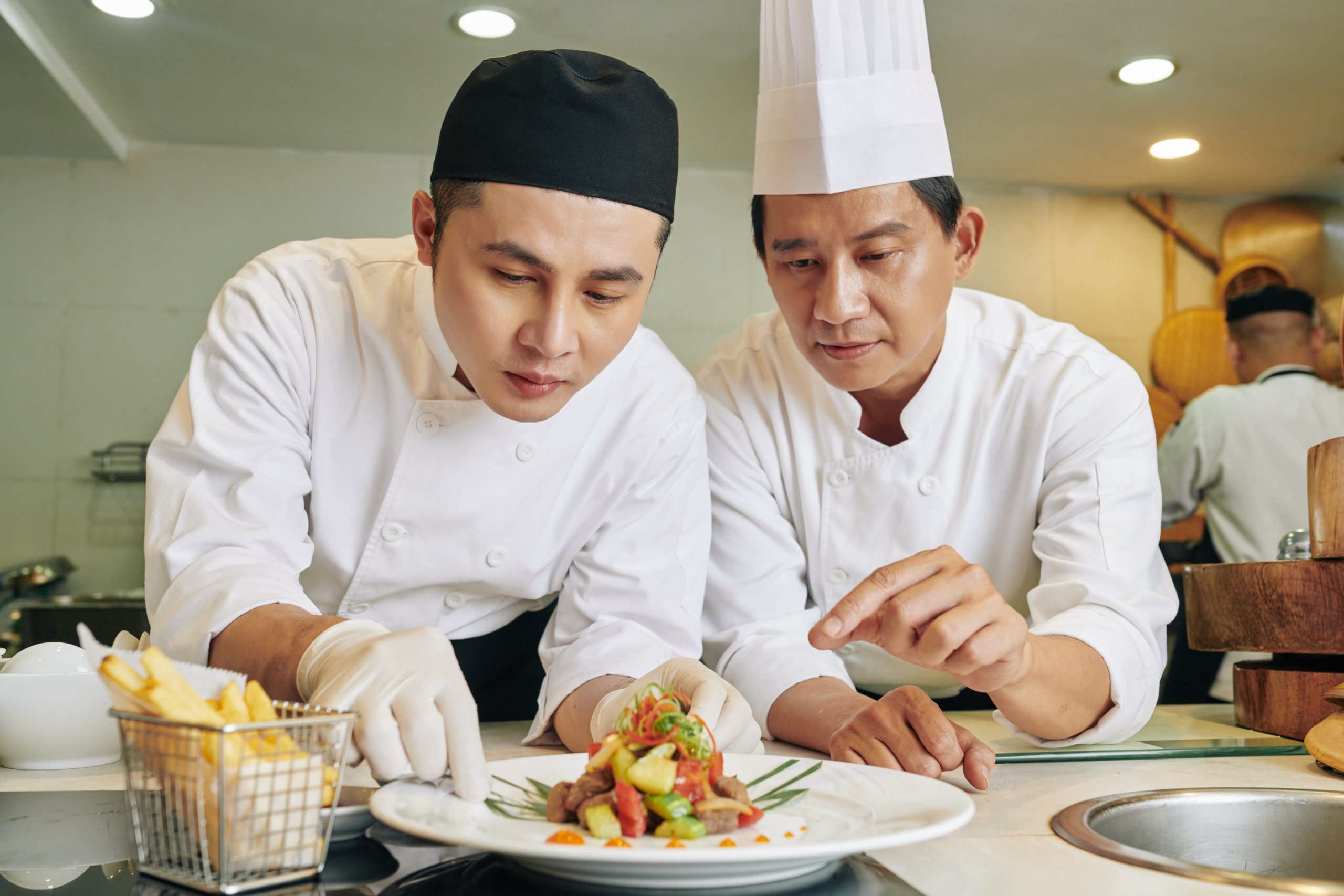
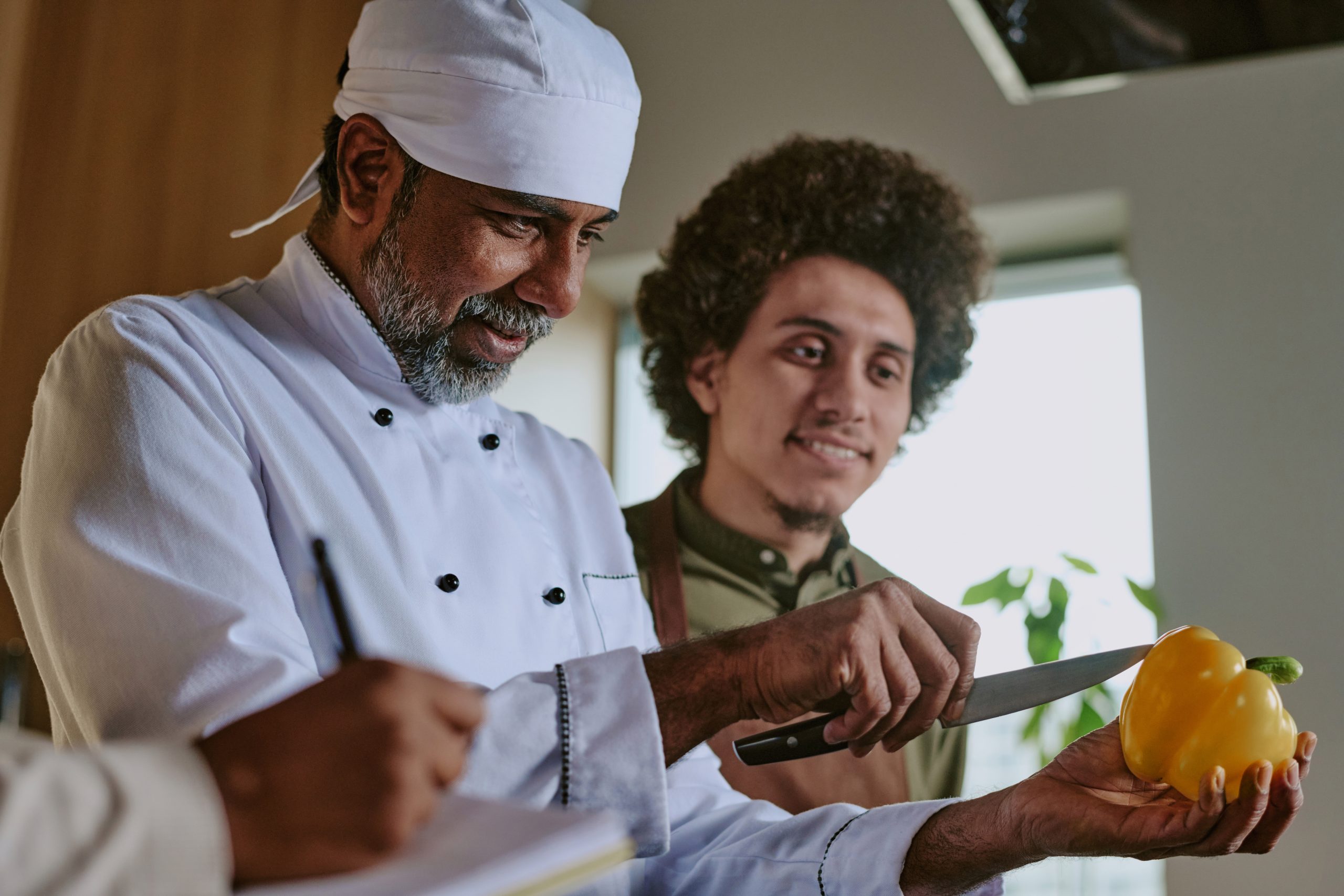
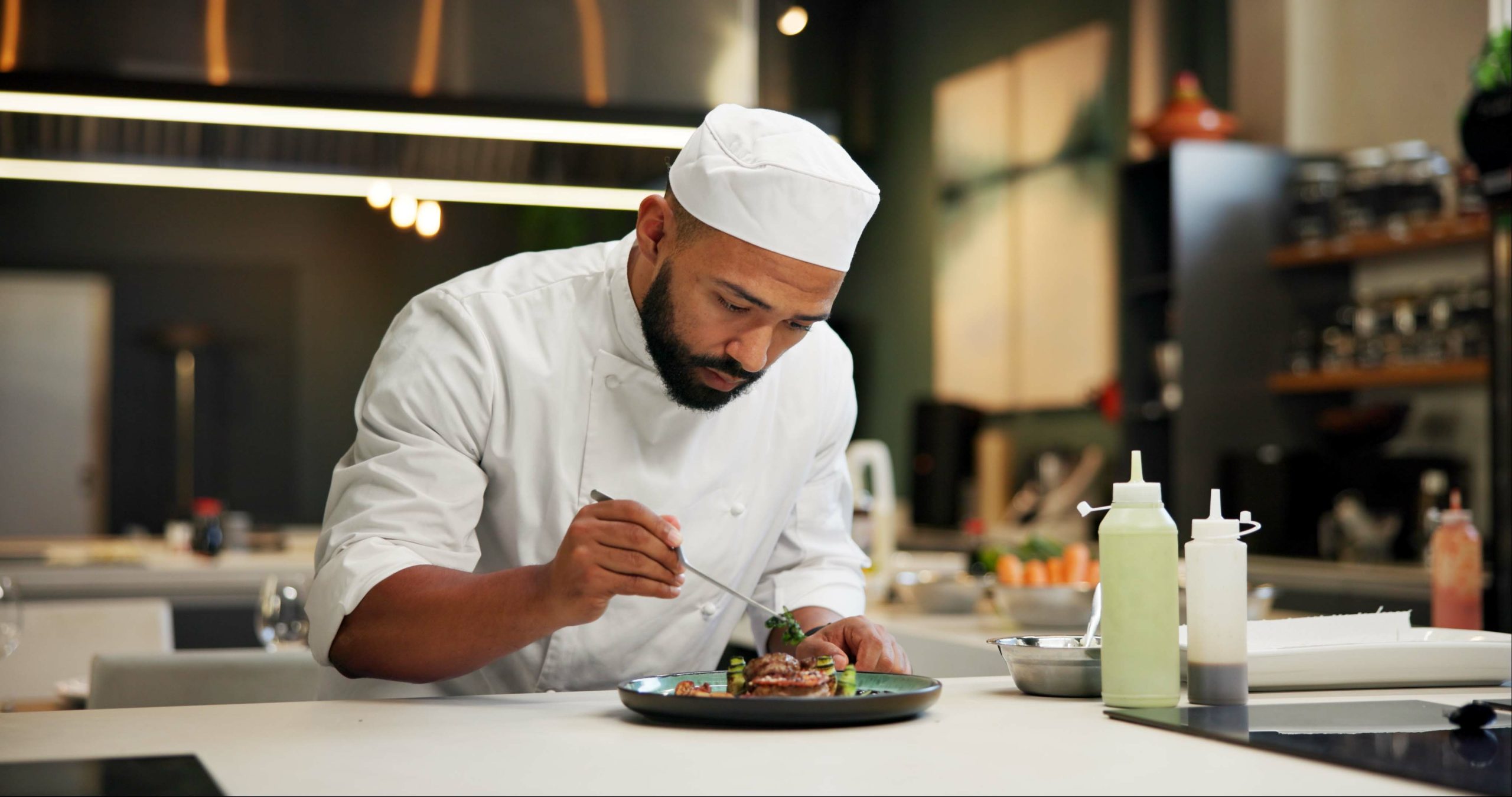


Even experienced chefs benefit from continuous training, especially when it comes to Halal cuisine. Halal chefs must balance culinary excellence with strict compliance, cultural authenticity, and evolving customer expectations. Structured training programs help chefs enhance skills, stay updated with industry standards, and elevate kitchen performance. Here’s how to improve Halal chef skills through training.
1. Halal Compliance and Certification Workshops
- Focus: Teach chefs about Halal dietary laws, ingredient sourcing, cross-contamination prevention, and certification processes.
- Benefits: Ensures chefs maintain strict adherence to Halal standards, building customer trust and avoiding compliance issues.
- Examples: Courses offered by Halal Science Center (Thailand), Islamic Food and Nutrition Council of America (IFANCA), or local Halal certifying bodies.
Impact: Chefs gain confidence in ingredient selection, kitchen practices, and regulatory knowledge.
2. Culinary Skill Enhancement Programs
- Focus: Hands-on training in regional Halal cuisines (Middle Eastern, South Asian, North African), modern techniques, and menu innovation.
- Benefits: Refines flavor profiles, presentation, and creative recipe development.
- Examples: Institutes like Culinary Institute of America (USA), Emirates Academy of Hospitality Management (UAE), and International Islamic University Malaysia.
Outcome: Chefs can deliver authentic, high-quality Halal dishes consistently.
3. Event and High-Volume Catering Training
- Focus: Preparing chefs to handle large-scale corporate events, weddings, and buffets efficiently.
- Benefits: Teaches portion management, timing, coordination, and team leadership.
- Examples: Hospitality workshops, catering bootcamps, or in-house training programs for Halal restaurants.
Impact: Enhances operational efficiency and service quality for high-guest-count events.
4. Plant-Based and Health-Focused Halal Cooking
- Focus: Training on vegan, vegetarian, and health-conscious Halal dishes, including nutritional balance.
- Benefits: Meets growing demand for diverse dietary options and eco-conscious menus.
- Examples: Specialized workshops, online masterclasses, or nutrition-focused culinary programs.
Outcome: Chefs can create inclusive menus that appeal to a wider audience.
5. Leadership and Team Management Courses
- Focus: Develop soft skills, kitchen management, and mentorship abilities.
- Benefits: Chefs learn to train staff, manage workflow, and maintain quality under pressure.
- Examples: Hospitality management programs, chef leadership workshops, or in-house mentorship initiatives.
Impact: Builds a cohesive, motivated kitchen team and ensures consistent execution of Halal standards.
6. Technology and Modern Culinary Tools
- Focus: Training on modern kitchen equipment, digital menu planning, portion tracking, and online ordering integration.
- Benefits: Increases efficiency, consistency, and innovation in Halal meal preparation.
- Examples: Culinary technology workshops, software tutorials, or smart kitchen equipment demonstrations.
Outcome: Chefs can leverage technology to streamline operations and enhance the guest experience.
Final Takeaway
Training programs for Halal chefs are essential for maintaining compliance, improving culinary skills, managing high-volume events, and fostering innovation. By investing in continuous learning, restaurants and catering businesses can ensure authentic, high-quality Halal cuisine while keeping chefs motivated and skilled for evolving industry demands.