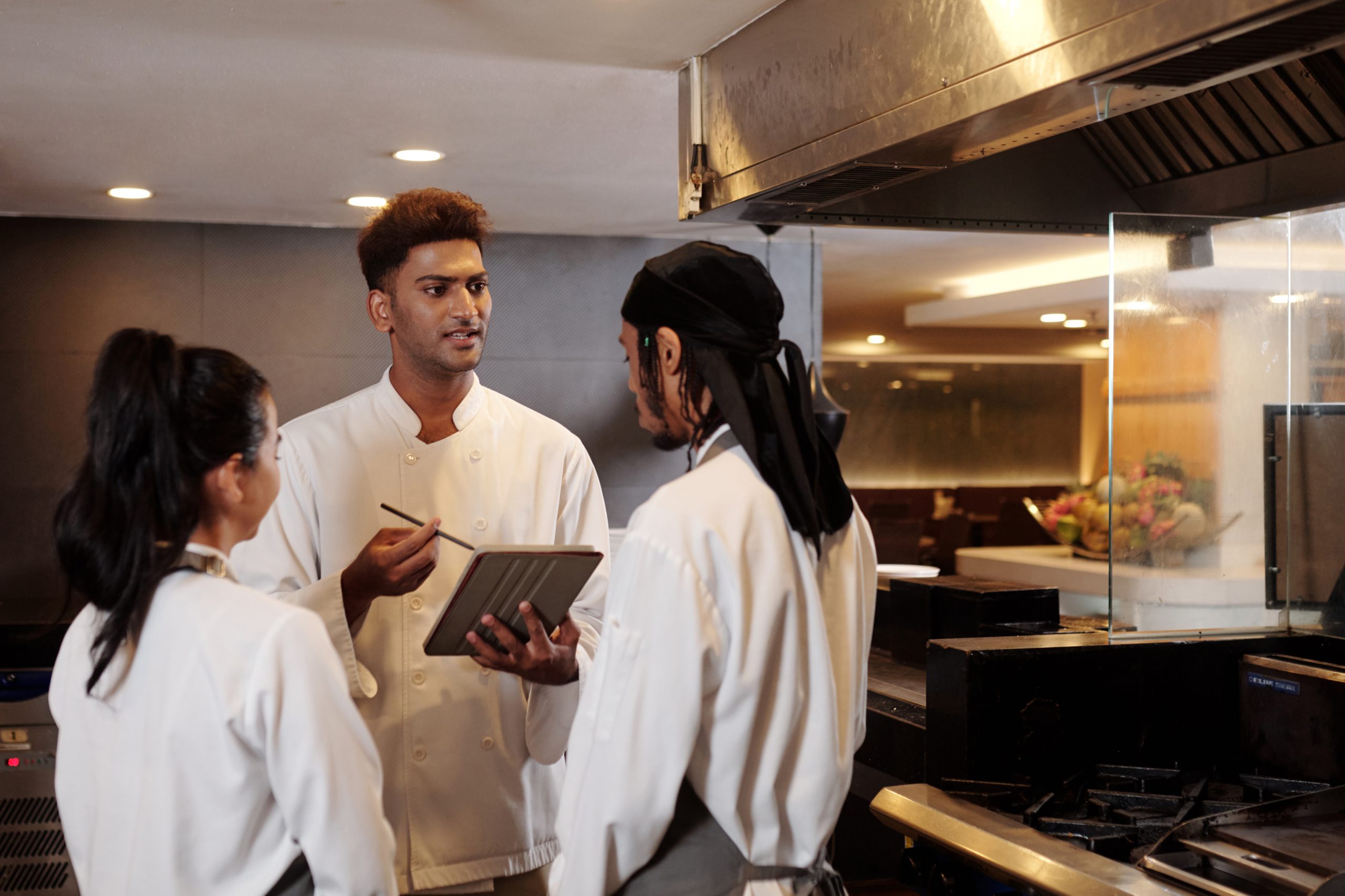

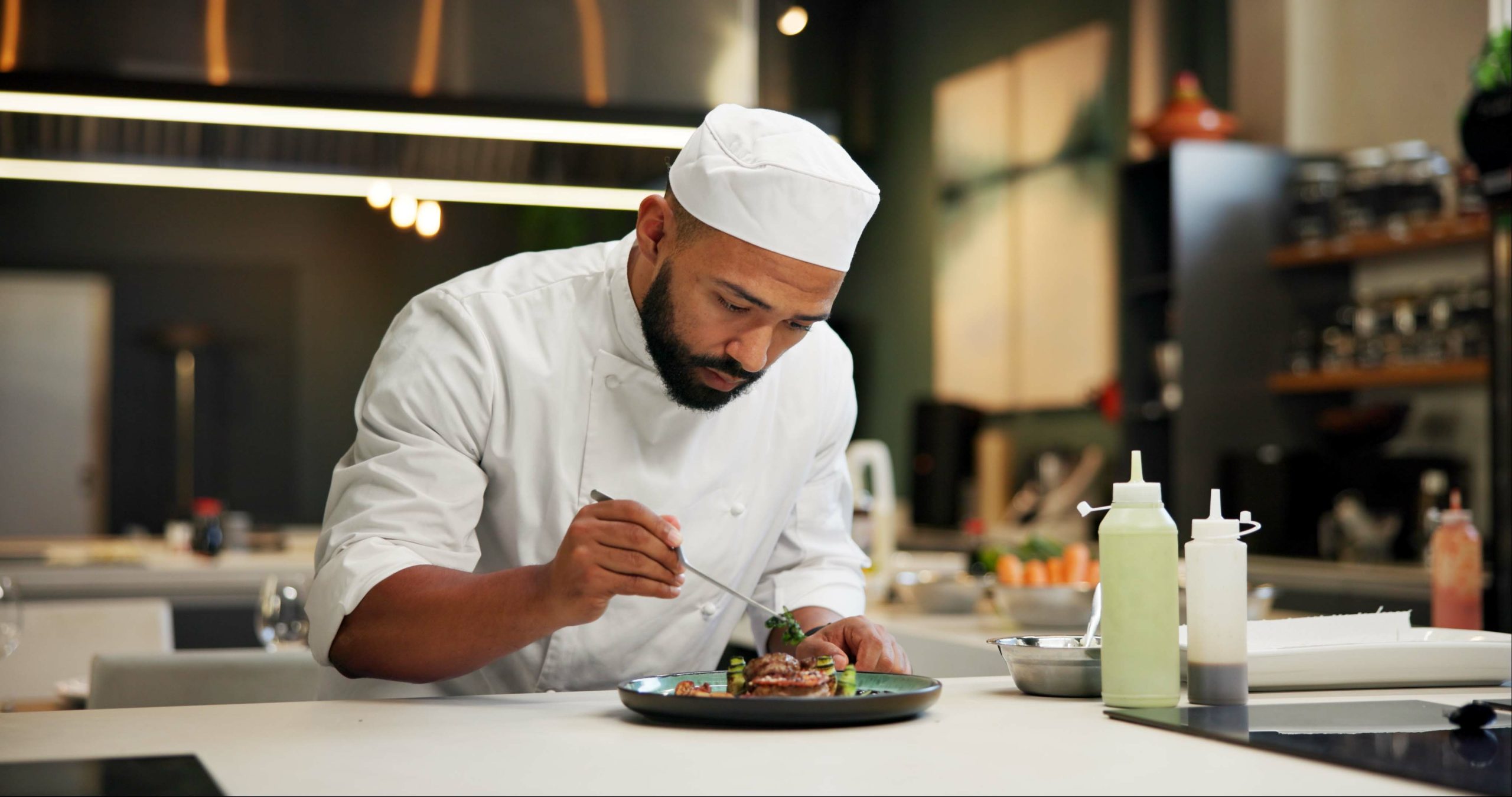




Managing a temporary Halal culinary team is a unique leadership challenge. You’re not building a long-term culture; you’re assembling a special operations unit for a defined mission. The dynamics differ from a permanent brigade: loyalty is to the mission, not the institution; time is compressed; and the margin for error is zero.
This playbook provides the framework to lead with clarity, command respect, and ensure flawless execution of both culinary and ethical standards under intense pressure.
Phase 1: Pre-Engagement: The Blueprint for Order
Success is determined before the team sets foot on site.
1. The “Mission Dossier”: Document Everything
Create a single, sacred source of truth. This is your operations manual.
- Halal Protocol Annex: Not a footnote. A detailed section covering:
- Approved Supplier List: Names, contacts, and required certification bodies (ISWA, IFANCA, etc.).
- Ingredient Verification Log: A template for the chef to sign off on every delivery.
- Cross-Contamination SOP: Color-coded system for tools/equipment, cleaning schedules for shared surfaces.
- “Point of No Return” Rules: Clear, non-negotiable directives (e.g., “No ingredient substitutions without prior written approval from [Your Name/Number]”).
- Culinary Spec Book: High-resolution photos and precise recipes for every menu item. Portion sizes, plating, garnish—leave nothing to interpretation.
- The Battle Plan: Hour-by-hour schedule from load-in to breakdown. Include designated meal and prayer breaks.
2. The “War Council” Briefing (Virtual, 1 Week Prior)
Gather the entire temporary team (chef, sous, line cooks) for a mandatory video conference.
- Agenda:
- Mission Statement: “We are here to execute 500 flawless Halal covers at the Summer Gala. Our reputation depends on it.”
- Role Call: Each person states their name, role, and one potential challenge they foresee.
- Walk the Dossier: Review key parts of the Mission Dossier live. This is where you establish your command style: firm, precise, and respectful.
- Q&A: Answer every question meticulously. “I don’t know, I’ll find out” is a valid and respected answer.
Phase 2: Engagement: Command & Control On-Site
This is where your leadership is tested in real-time.
1. The Load-In & Setup: Establish Dominance Through Organization
- You are the first to arrive, last to leave.
- Conduct the “Kitchen Layout” Briefing: Physically walk the space with the Lead Chef. Use tape to mark stations. Designate “Halal Zones” and “Non-Halal Zones” (if applicable) visibly.
- The “Equipment & Ingredient Parade”: Lay out every tool and ingredient. The Lead Chef must verify counts and certifications on the spot. This ritual builds accountability.
2. Daily “Huddle & Huddle” Communication
- Pre-Service Huddle (15 mins):
- State the Mission: “Tonight, we have 200 covers, 3 seatings. Our focus is pace and presentation.”
- Highlight the Halal Check: “Remember, the lamb is from Halal Pastures—certs are on the clipboard. The new fryer oil is plant-based, verified.”
- Assign a “Watch”: “Maria, you are the cross-contamination watch today. If you see a breach, call it out immediately.”
- Post-Service Debrief (10 mins):
- Hotwash: What went well? What broke? (Focus on systems, not people).
- Document & Adapt: Note adjustments for the next service.
3. Leadership Style: The “Respected General” Model
- Visibility & Calm: Your presence on the line should be steadying, not hovering. You are a source of answers, not anxiety.
- Decisive Authority: When a protocol question arises, you give the final, immediate ruling based on your Dossier. Indecision is contagious and corrosive.
- Praise in Public, Correct in Private: Celebrate a perfect ticket rush openly. Pull a team member aside for a calm, direct correction on a procedural misstep.
Phase 3: Navigation: Handling the Inevitable Crises
Problems will arise. Your response defines the team’s morale and output.
| Crisis Scenario | Your Immediate Action | The Principle |
|---|---|---|
| A Halal protocol is breached (e.g., wrong tongs used). | 1. STOP. Halt service on that station if needed. 2. ISOLATE & QUARANTINE the potentially contaminated product. 3. RE-BRIEF the entire team on the spot, calmly. 4. DOCUMENT the incident and corrective action. | Integrity Over Revenue. The cost of a violation is infinite. |
| Team conflict arises between temp and permanent staff. | 1. Separate the parties. 2. Listen to both sides privately. 3. Re-assert the chain of command and common mission. 4. Make a binding decision to restore order. | Mission First. Personal dynamics are secondary to execution. |
| A key temp team member calls in sick. | 1. Activate your pre-identified backup (always have 1-2 on call). 2. Re-distribute roles; simplify the menu if necessary. 3. Communicate the adjusted plan to the team to maintain confidence. | Redundancy is Not Waste. It is insurance. |
Phase 4: The Halal Integrity Feedback Loop
This is your unique monitoring system for a temporary team.
- The “Three-Check” System:
- Chef’s Check: Lead chef verifies all certificates at load-in.
- Manager’s Spot Audit: You randomly select one ingredient mid-service and ask to see its paper trail.
- Team Member Cross-Check: Empower any team member to politely question an unlabeled product. Create a “see something, say something” culture.
- The “Clean Break” Log: A physical clipboard where the opening and closing manager sign off that all Halal/non-Halal separation protocols were confirmed at shift change.
The Temporary Team Motivator Toolkit
This team is not driven by long-term career growth. Your levers are different.
- Financial Clarity & Promptness: Pay agreed rates immediately at the end of the engagement, if not daily. Nothing builds trust faster.
- Feed Them Well: Provide a family meal that is above and beyond the service food—a sign of respect for their craft and stamina.
- Public Acknowledgment: Take a team photo. Tag them (with permission) in social media posts praising the event’s success. They are building their portfolios.
- The “Career Currency” Offer: “If this goes well, you are first on my list for our next project, and I will provide a stellar LinkedIn recommendation.” This aligns their success with yours.
Post-Engagement: The Strategic Debrief
This step turns a one-off project into a repeatable system.
- 24-Hour Debrief Survey: Send a short, anonymous survey to the temp team: “What one thing would have made your job easier?” “Was any part of the Halal protocol unclear?”
- Performance File: For each standout team member, create a note: “Aisha Khan – phenomenal under pressure during the Saturday rush. Meticulous with labeling. Would rehire in a heartbeat.” This builds your talent bank.
- Contractor Review: For the Lead Temp Chef, provide a written review they can use for future gigs. Be specific and generous if earned.
Red Flags & Green Lights in a Temp Leader
🚩 Leadership Red Flags:
- Chef is reluctant to follow the documented “Mission Dossier,” insisting only on their own ways.
- Shows visible frustration when questioned about sourcing or protocols.
- Fails to conduct their own pre-service briefings with their sub-team.
- Allows “us vs. them” dynamics to develop with permanent staff.
✅ Leadership Green Lights:
- Arrives with their own checklists, cross-referencing them with your Dossier.
- Proactively trains their assigned line cooks on your specific Halal SOPs.
- Communicates potential problems before they become crises (“Chef, we’re low on verified oil—need a decision in 30 minutes”).
- Leaves the kitchen cleaner than they found it.
Final Command Decision: Managing temporary Halal teams is the ultimate test of a leader’s ability to project authority, instill discipline, and inspire excellence in a compressed timeline. You are not just managing labor; you are stewarding a sacred trust (Halal integrity) through a high-pressure event. The systems you create and the respect you command will determine whether your temporary team is a liability or your most powerful strategic asset. Lead with clarity, enforce with consistency, and reward with respect. The best temp chefs will follow you into any culinary battle.