



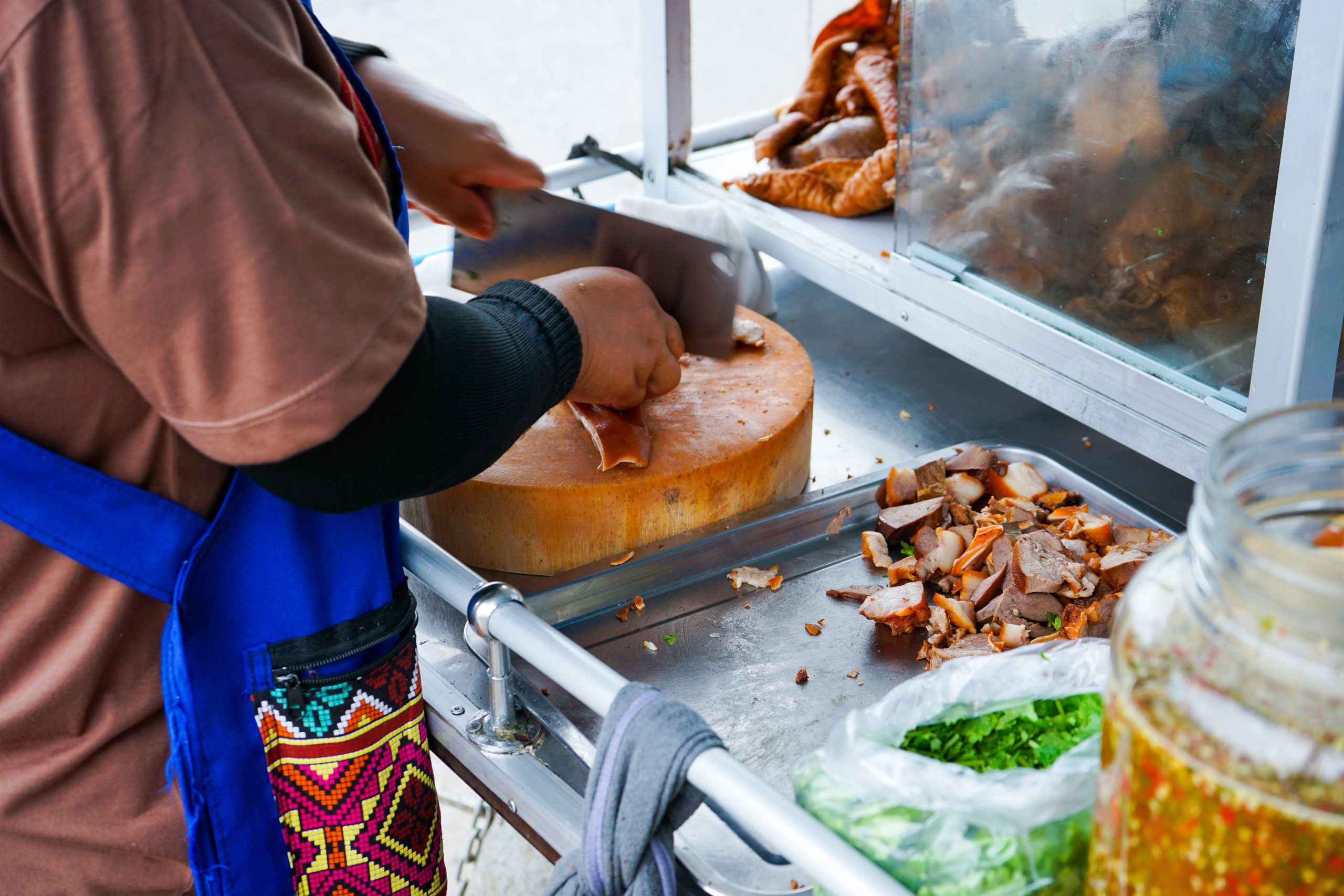



Halal compliance is not a single checkpoint; it’s a continuous, integrated system woven into every strand of your kitchen’s operations. A breach doesn’t just risk your brand—it breaks a sacred trust. This guide outlines the actionable, end-to-end system to guarantee integrity from supplier to plate.
Phase 1: The Foundation – Supplier Vetting & Documentation
The chain of integrity is only as strong as its first link.
A. The Mandatory “Three-Lock” Supplier Approval
A supplier does not get added to your list with just a certificate. They pass three gates:
- Document Lock (The Paper Trail):
- Obtain their current, valid Halal certificate from a recognized, accredited body (e.g., ISWA, IFANCA, HFSAA, MJL in North America; JAKIM in Malaysia; ESMA in UAE).
- Verify the certificate online directly on the certifier’s website. Fake certificates exist.
- The certificate must explicitly cover the specific products you are purchasing (e.g., a “meat” certificate does not automatically cover processed sausages from the same supplier).
- Facility Lock (The Source Verification):
- Require a facility audit report or schedule a visit. You or your head chef must see the operation.
- Key Checkpoints: Separation of Halal/non-Halal lines, sourcing of raw materials, sanitation processes, storage segregation.
- For international suppliers, use a trusted third-party auditing firm in that country.
- Contractual Lock (The Legal Assurance):
- Your supply contract must include a Halal Compliance Clause that holds the supplier financially liable for any breach and mandates immediate notification of any change in their certification status.
B. The “Live Certificate” Digital Library
- Tool: Use a cloud storage system (Google Drive, Dropbox) or specialized software (Back of House, Nutritics).
- Process: Every certificate is scanned, named clearly (
SupplierName_Cert_Exp2025-03.pdf), and filed. Set calendar alerts for expiry dates 60 days out. - Access: The Head Chef and GM have instant access on a tablet in the kitchen.
Phase 2: The In-Kingdom – Receiving, Storage & Prep Protocols
This is where your daily discipline is tested.
The Receiving Dock: The Final Gatekeeper
- Designated Halal Receiver: One trained person (Chef, Sous) is responsible for all meat/protein deliveries.
- The 4-Point Check for Every Delivery:
- Match: Does the product match the order from an approved supplier?
- Certificate: Does the delivery manifest or invoice reference the current certificate number? (The driver should have a copy).
- Seal & Label: Are intact Halal seals on containers? Is packaging labeled with the certifier’s logo?
- Condition: Is the product at correct temperature and free of damage?
- Action: STOP any delivery failing any point. Refuse it. Log the incident.
The Storage Matrix: Color-Coded Segregation
- Physically Separate Storage: Halal raw meats must have dedicated refrigerators and freezers. If space demands shared units, they go on dedicated, lower shelves with drip-proof containers.
- The Universal Color Code:
- RED: Raw Halal Meat & Poultry.
- YELLOW: Raw Halal Seafood.
- GREEN: All Vegetables & Fruits.
- BLUE: Cooked Halal Foods.
- WHITE: Dairy & Neutral.
- Tools follow color: Knives, cutting boards, tongs, storage bins, even sharpies must be color-coded. This makes cross-contamination a visible, obvious error.
The Prep Zone: Process as Doctrine
- Temporal Separation: If you must use shared equipment (e.g., a grinder, slicer), process Halal items first, then follow a full breakdown, cleaning, and sanitization protocol verified by a manager before non-Halal items (if any) are processed.
- Dedicated Fryers & Grills: Ideally, have equipment dedicated to Halal. If shared, it must be completely filtered and cleaned under supervision between uses. Document each cleaning in a log.
- The “No Mystery Container” Rule: Every container in coolers and dry storage must have a label with: Item Name, Prep Date, Use-By Date, and Initials of the person who prepared it. No exceptions.
Phase 3: The Human Layer – Training, Culture & Accountability
Systems are useless without the people to uphold them.
A. The Tiered Training Program
- Tier 1: Onboarding (Day 1): Every new hire, including FOH and dishwashers, completes a 2-hour module on “The Why and How of Our Halal Integrity.”
- Tier 2: Station-Specific Certification: No one touches a station until they pass a practical test on that station’s color codes, tools, and procedures.
- Tier 3: Quarterly Refresher & “What-If” Drills: Conduct short sessions on one specific protocol. Run scenario drills: “The fryer oil hasn’t been changed since the shrimp went through. What do you do?”
B. Building a Culture of Collective Guardianship
- Empower Every Employee: The lowest-ranked dishwasher must feel empowered to say, “Chef, that red-label chicken is in the green bin.” Reward that behavior publicly.
- The “Halal Point Person” (HPP): Designate one respected line cook per shift as the go-to for quick protocol questions. Rotate this role to build widespread expertise.
- Transparency with Customers: Have a one-page document your servers can share: “Our Kitchen Integrity Promise,” explaining your sourcing and separation practices. This turns scrutiny into a marketing advantage.
C. Audits & Corrective Action
- Weekly Self-Audit: The Head Chef and GM conduct a surprise audit using a checklist: Check 3 storage units, 2 prep stations, and review 5 random ingredient certificates.
- Monthly Deep Audit: Bring in a third-party Halal consultant or a respected community scholar to audit your kitchen and paperwork. Their report is gold.
- The Non-Negotiable Response: Any verified breach triggers:
- Immediate Containment (quarantine product).
- Root Cause Analysis (was it training, system, or negligence?).
- Corrective Action (retraining, system change, or personnel action).
- Documentation (log the incident and resolution).
The Halal Compliance Dashboard: Your Weekly Snapshot
Track these metrics in a weekly leadership meeting:
| Metric | Target | Why It Matters |
|---|---|---|
| Certificate Expiry Status | 100% Current | Prevents accidental use of non-certified goods. |
| Supplier Delivery Rejection Rate | 0% | Tests the strength of your receiving protocol. |
| Self-Audit Score | 95%+ | Measures internal vigilance. |
| Staff Training Completion % | 100% | Ensures knowledge is current. |
| “First-Time-Right” Order Rate | 99.9%+ | Ultimate measure of system effectiveness. |
The Red Line: When a Breach Occurs
Despite best efforts, a suspected breach can happen. Have a clear, written crisis protocol:
- Immediate Isolation: Quarantine all potentially affected product. Halt service of that item.
- Executive Notification: Inform ownership/GM immediately.
- Transparent Investigation: Document what happened, how, and what product is implicated.
- Public Communication (if needed): If compromised product left the kitchen, prepare a direct, honest, and apologetic communication plan for affected customers.
- System Reformation: Use the failure to permanently improve the system. “Because of X, we will now implement Y.”
Final Reality: Ensuring Halal compliance is a non-delegable, core function of ownership and top management. It requires investment in systems, relentless training, and a culture of sacred responsibility. It is the hardest work you will do, and it is the very reason your most loyal customers walk through your door. Treat it not as a cost of doing business, but as the fundamental promise that is your business.