

The practical test is your most critical hiring tool. It’s a live, unfiltered look at a candidate’s skill, integrity, and temperament under pressure. For a Halal chef, this test must be a dual-purpose crucible that evaluates culinary mastery and operational piety simultaneously.
Here is the complete framework for designing and executing a decisive, fair, and revealing practical exam.
Part 1: Pre-Test Principles & Setup
The Core Objectives of Your Test:
- Skill Validation: Confirm the hands-on ability claimed on their resume.
- Process Revelation: Observe their method, not just their final product.
- Integrity Under Pressure: See if their standards hold when the clock is ticking.
- Cultural & Team Fit: Gauge their communication and demeanor in your kitchen.
Logistics & Ethics:
- Always Pay for the Test: Offer a standard honorarium ($100-$250) for their time and ingredients. This shows professionalism, respects their craft, and avoids legal issues with unpaid work.
- Schedule Strategically: Conduct the test during off-hours (e.g., Tuesday 2-5 PM). Your kitchen must be calm and fully available to them.
- Provide a Clear Brief: Send a document 24 hours in advance outlining: Duration (3-4 hrs), What they need to bring (knives, specialty tools), What you will provide (basic pantry, proteins, equipment), and the test structure.
Part 2: The Three-Part Practical Exam Structure
Design a 3-4 hour test that moves from fundamentals to creativity.
Stage 1: The Foundational Technique Test (60-75 mins)
Purpose: Assess non-negotiable core skills. This is pass/fail.
- The Task: Provide a whole, Halal-certified chicken and a standard mirepoix (onion, carrot, celery, herbs). Do not provide stock.
- The Ask: “Please fabricate this chicken and prepare a classic, clear chicken consommé. You have one hour. We will evaluate your technique, yield, and final product.”
- What You’re Rigorously Evaluating:
- Butchery & Respect: How do they handle the animal? Is it precise and organized? What’s their yield? Do they neatly organize parts (breasts, thighs, wings, bones for stock)?
- Technical Purity: Consommé is a chef’s litmus test. It requires clarification, flavor extraction, and precision without relying on pre-made, potentially non-compliant bases. Is it crystal clear? Is the flavor deep, clean, and balanced?
- Mise en Place & Cleanliness: Is their station organized? Do they work cleanly, managing scraps and wiping down?
Scoring: A failed consommé (cloudy, weak flavor) or sloppy butchery is a strong indicator of inadequate foundational training. Consider ending the test here for a senior role.
Stage 2: The Halal-Specific Protocol & Improv Test (60-75 mins)
Purpose: Evaluate their integrity intelligence and adaptive thinking.
- The Setup: Create a “Kitchen Scenario” with intentional integrity challenges.
- Set up a station with shared equipment (one cutting board, one chef’s knife, one sauté pan).
- Provide two proteins: one clearly labeled Halal lamb loin, one unlabeled “mystery protein” (could be a non-Halal cut or a different Halal meat).
- Provide a sauce ingredient with a vague label (e.g., “Worcestershire Sauce” or “Vegetable Broth”).
- The Ask: *”Please prepare the lamb loin to medium-rare with a pan sauce, utilizing the ingredients here. You have 45 minutes for active cooking.”*
- What You’re Observing (The Hidden Test):
- Their First Move: Do they immediately ask for the certification or source of the mystery protein and the sauce? Or do they just start cooking? This is the single most telling action.
- Cross-Contamination Management: With only one board/knife, how do they proceed? Do they request separate tools, clean meticulously between tasks, or use a temporal sequence (veg first, then protein)?
- Problem-Solving: If they reject the mystery item, what do they build the sauce with? Do they improvise a reduction from pantry items (onions, vinegar, stock)?
- Debrief Question: After plating, ask: “Walk me through your decisions regarding the unlabeled ingredients and your equipment use.”
Stage 3: The Signature & Palate Test (60 mins)
Purpose: Assess creativity, palate, and cultural depth.
- The Task: They prepare one signature dish of their choice that represents their culinary point of view within Halal cuisine.
- The Key Instruction: “As you cook, please narrate your process. Explain your technique choices, the story behind the dish, and how you balance the flavors.”
- What You’re Evaluating:
- Narrative & Teaching Ability: Can they articulate the why? This is crucial for a leader.
- Technical Nuance: Are they controlling variables (resting meat, frying at correct temp, seasoning in layers)?
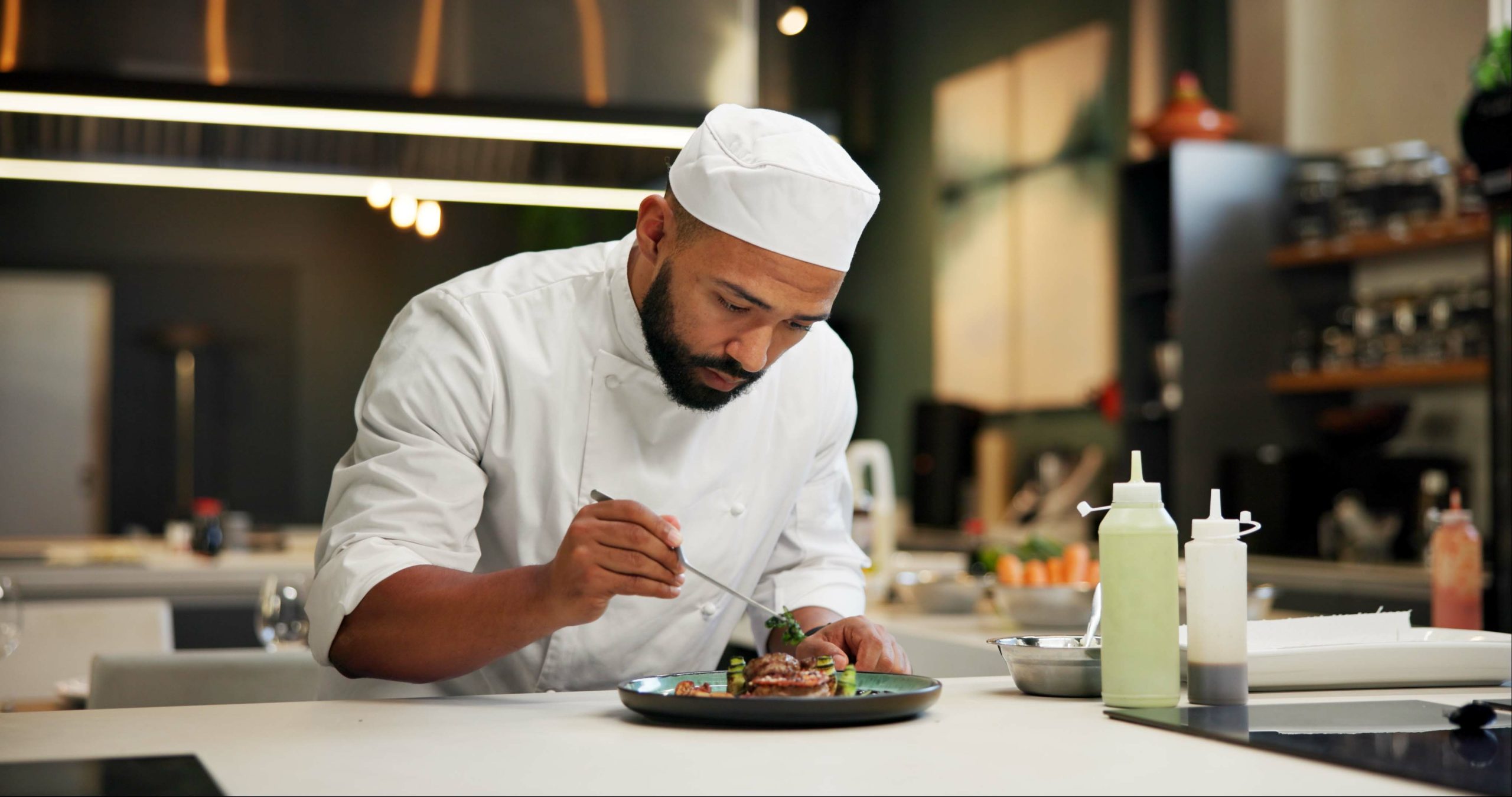
- Plating & Balance: Is the dish visually appealing? Does it taste balanced and intentional?
Part 3: The Evaluation Matrix: What to Score
Use a simple scorecard (1-5 scale) for each candidate.
| Evaluation Category | What to Look For (5 = Excellent) | Weight |
|---|---|---|
| 1. Foundational Skill | Consommé clarity/flavor; butchery precision/yield; station organization. | 25% |
| 2. Halal Protocol Integrity | Proactive ingredient inquiry; cross-contamination vigilance; clean workflow. | 30% |
| 3. Adaptive Problem-Solving | Improvisation when rejecting an ingredient; resourcefulness in sauce-making. | 20% |
| 4. Creativity & Execution | Signature dish flavor, technique, and plating; coherence of concept. | 15% |
| 5. Professional Demeanor | Calm under test pressure; clear communication; respect for kitchen and ingredients. | 10% |
Overall Score: _____ / 5
Notes: [Record specific observations, e.g., “Asked for cert on lamb immediately,” “Sauce was over-reduced.”]
The Post-Test Interview & Scenario Questions
Immediately after the practical, sit down for a 20-minute focused discussion while the experience is fresh.
Ask:
- On Their Choices: “You chose to [specific action] during the improv test. What was the risk you were mitigating?”
- On Cost & Yield: “Walk me through the food cost for your signature dish. What’s the most expensive component and how would you manage its yield in a real service setting?”
- On a Past Failure: “Tell me about a time a new dish you created didn’t work. What did you learn, and how did it make you a better chef?”
Critical Red Flags During the Practical
🚩 Immediate Disqualifiers:
- Uses the mystery protein without inquiry.
- Fails to clean or separate equipment between tasks, showing blatant disregard for cross-contamination.
- Is wasteful or disrespectful with premium Halal ingredients.
- Shows a bad temper, blames your equipment, or is unsafe.
⚠️ Yellow Flags (Proceed with Extreme Caution):
- Needs constant guidance or asks overly basic questions for their claimed experience level.
- Works in a chaotic, messy manner despite having time.
- Signature dish is poorly seasoned or technically flawed (undercooked, broken sauce).
Best Practices for Execution
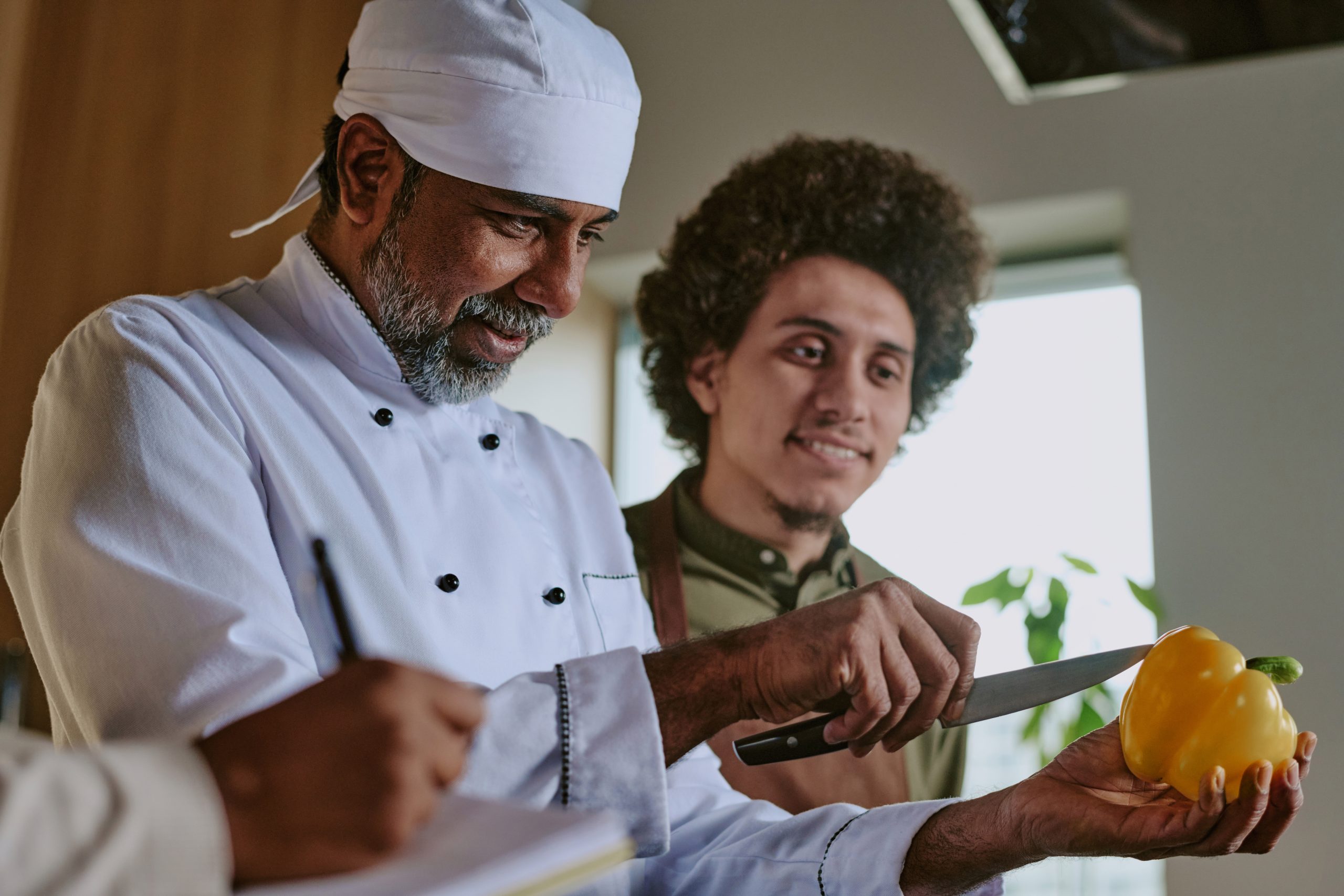
- Assign a Shadow: Have your current sous chef or a trusted line cook observe and take notes. They see things you might miss and can assess team fit.
- Keep it Fair: Provide identical ingredients and equipment to all candidates testing for the same role.
- Taste Blind: If possible, have dishes presented without the candidate’s name for a blind tasting by you and your shadow.
- Debrief with Your Team: Discuss the candidate’s performance with your observer immediately after. Compare notes on the scorecard.
The Final Analysis: The practical test transforms a resume from a promise into a performance. It reveals the candidate’s true identity: are they a thoughtful guardian-artist or just a cook looking for a job? By structuring a test that equally weights skill and sanctity, you ensure the person you hire can not only navigate your kitchen but can be entrusted with its very soul. This isn’t an audition; it’s an ordination. Conduct it with the seriousness it deserves.