

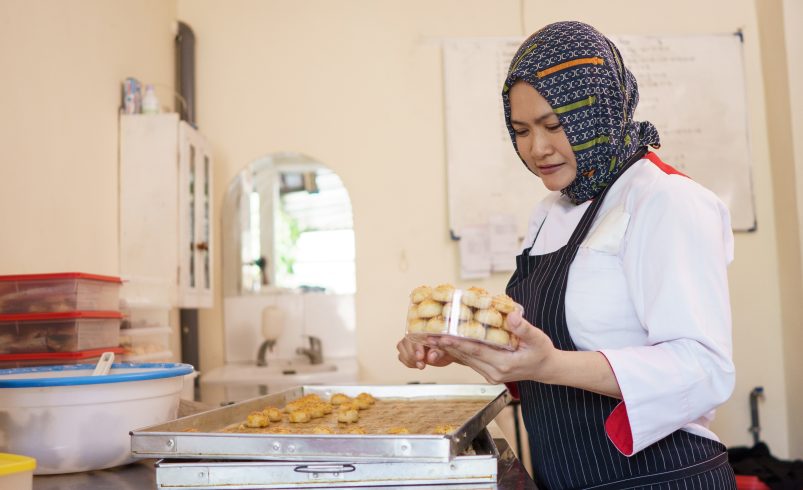

For a Halal chef, a traditional corporate ladder (Line Cook → Sous Chef → Head Chef) is insufficient and uninspiring. Their career growth must acknowledge dual mastery: culinary artistry and ethical stewardship. You must build a growth lattice—a multi-dimensional framework that offers upward, lateral, and expert-track progression.
Here is how to architect compelling, personalized career paths that retain top talent by investing in their whole professional identity.
The Three-Track Growth Model
Offer distinct pathways, allowing chefs to grow in the direction of their innate strengths and passions.
Track 1: The Operational Leadership Track (The Traditional Ladder)
For those who aspire to run kitchens and lead large teams.
- Stages & Milestones:
- Commis de Cuisine: Mastery of one station with full Halal protocol compliance.
- Chef de Partie (Station Guardian): Leads a station, responsible for its compliance audits and training new commis.
- Sous Chef (Guardian of the Line): Manages shift operations, enforces SOPs, conducts supply receiving checks.
- Chef de Cuisine (Kitchen Sovereign): Full P&L responsibility, menu creation, supply chain management, final authority on all Halal compliance.
- Executive Chef / Culinary Director (Architect of Integrity): Oversees multiple concepts, develops company-wide standards, leads R&D for new ventures.
- Key Differentiator: At each stage, add explicit Halal leadership duties to the title and job description. Promotion isn’t just about managing more people, but about guardianship of a larger domain of integrity.
Track 2: The Subject Matter Expert (SME) Track (The “Master” Path)
For the brilliant culinarian who is a technician, innovator, or purist, but not a people manager.
- Stages & Milestones:
- Specialist: Deep expertise in one area (e.g., Tandoor Master, Mithai Artisan, Halal Charcuterie Expert).
- Master Chef: Recognized authority. Develops and documents all recipes and techniques for their specialty. Trains other locations.
- Corporate R&D Chef / “Culinologist”: Dedicated role focused on new product development, sourcing innovative Halal ingredients, and solving technical culinary problems (e.g., perfecting an alcohol-free demi-glace system).
- Brand Ambassador / Culinary Ethicist: Represents the brand at conferences, writes on Halal culinary science, consults on industry standards. Their expertise is their product.
- Key Differentiator: Compensation and prestige are tied to depth of knowledge, innovation output, and teaching ability, not headcount. They can earn equal to or more than an Executive Chef without direct reports.
Track 3: The Business & Entrepreneurship Track (The “Partner” Path)
For the chef with business acumen and entrepreneurial drive.
- Stages & Milestones:
- Kitchen Manager: Learns food cost, inventory, and labor management in depth.
- Concept Developer: Leads the opening of a pop-up, ghost kitchen, or new menu line. Manages its P&L.
- Partner / Chef-Owner of a New Location: Offered equity or profit-sharing to launch and run a new restaurant under the brand’s umbrella.
- Franchise Consultant / Supplier Liaison: Uses their expertise to vet and train new franchisees or develop exclusive product lines with suppliers.
- Key Differentiator: Growth is measured in business metrics and ownership stake. This path turns a chef into a true business partner.
The “Growth Toolkit”: Supporting Mechanisms for All Tracks
These programs fuel progression along any track.
- The “Mastery Certification” Program:
- Fund advanced, external certifications relevant to their track:
- Leadership Track: ServSafe Manager, Hospitality Finance.
- SME Track: Certified Culinary Scientist (CCS), specialized pastry/chocolate courses, accredited Halal Lead Auditor certification.
- Business Track: Business courses, lean manufacturing for kitchens.
- Fund advanced, external certifications relevant to their track:
- The “Stage & Research” Sabbatical:
- After 3 years, offer a 2-week paid sabbatical to “stage” (extern) at a renowned restaurant (Halal or non-Halal for technique) or visit a region central to your cuisine. They return with a report and one new implemented idea.
- The “Teach to Lead” Mandate:
- Promotion to any level above Chef de Partie requires they document one complete training module (video + guide) for their previous role. This institutionalizes knowledge and proves teaching ability.
- The “Public Portfolio” Build:
- The company actively builds their public profile. Help them create a professional website, manage their social media, and secure speaking/writing opportunities. Their growing fame becomes an asset for retention.
Visualizing the Path: The Career Lattice Map
Create a physical/digital “Career Lattice” map in the kitchen office. It shows all three tracks, with clear “bridge points” where someone can move from, say, the SME track to the Leadership track.
Example Bridge: A Master Chef of BBQ (SME Track) who wants to open their own location can bridge to the Concept Developer role (Business Track) by completing specific business finance training.
Personalized Growth Plans: The Quarterly “Career Sync”
Twice a year, the chef and their manager have a formal 30-minute “Career Sync” meeting, separate from performance reviews.
Agenda:
- “On a scale of 1-10, how challenged are you?”
- “Which track on the Lattice most excites you for the next 2 years?”
- “What one skill do you need to develop to get to your next desired role?” (Then, commit to a specific training or project to build it).
- “What’s one thing I can do to better support your growth?”
This meeting is documented and followed up on.
Recognition & Ritual: Marking the Milestones
Promotions and achievements are celebrated with meaningful ritual, not just an email.
- Promotion to Sous Chef (Guardian of the Line): Public ceremony where they are given a personalized, high-quality thermometer (symbolizing precision and vigilance) and the keys to the dry storage.
- Achieving Master Chef (SME Track): A named dish permanently added to the menu (“Ahmed’s Dum Biryani”) and a feature in the company newsletter.
- 5-Year Anniversary: A sabbatical bonus and a framed “family tree” showing all the cooks they have trained who are still with the company.
The Business Case: Why This Is Your Best Retention Tool
- Solves the “Ceiling” Problem: A brilliant tandoor chef doesn’t have to become a mediocre manager to grow. They can become a Master.
- Turns Poaching into a Non-Issue: A competitor can offer a 20% raise, but they can’t offer a clear path to becoming a Brand Ambassador or a future equity partner in a new location.
- Builds Institutional Knowledge: The SME track intentionally creates in-house experts who document and teach, making your operations less fragile.
- Attracts Elite Talent: Ambitious chefs will seek you out because you are known for developing careers, not just filling positions.
Final Implementation: Start by mapping your current star chefs onto the three-track model. Have a conversation with each, presenting the lattice and asking, “Where do you see yourself?” Their answer will guide your first investment. Then, build the programs around them. You’re not just creating a career path; you’re co-authoring their professional legacy. That is the ultimate form of respect and the most powerful retention strategy of all.